

CREATED IN CHINA
Humanoid robots in China



Over recent years, much of the attention on China has focused on macroeconomic challenges, including geopolitical tensions, weakness in the property sector and concerns around domestic demand. While these issues remain important considerations, they have often obscured one of the most important developments taking place within the economy: the emergence of a new generation of globally competitive technology companies.
Investors’ understanding of China’s technological capabilities has evolved considerably in recent years. DeepSeek helped challenge established perceptions of the country’s progress in artificial intelligence. But more broadly across semiconductors, robotics, advanced manufacturing, automation and electric vehicles, Chinese companies are demonstrating an increasing ability not only to innovate, but also to commercialise new technologies at scale. Growing self-sufficiency in critical technologies has encouraged sustained investment across strategic industries, helping to create new technology leaders and strengthen China’s industrial base.
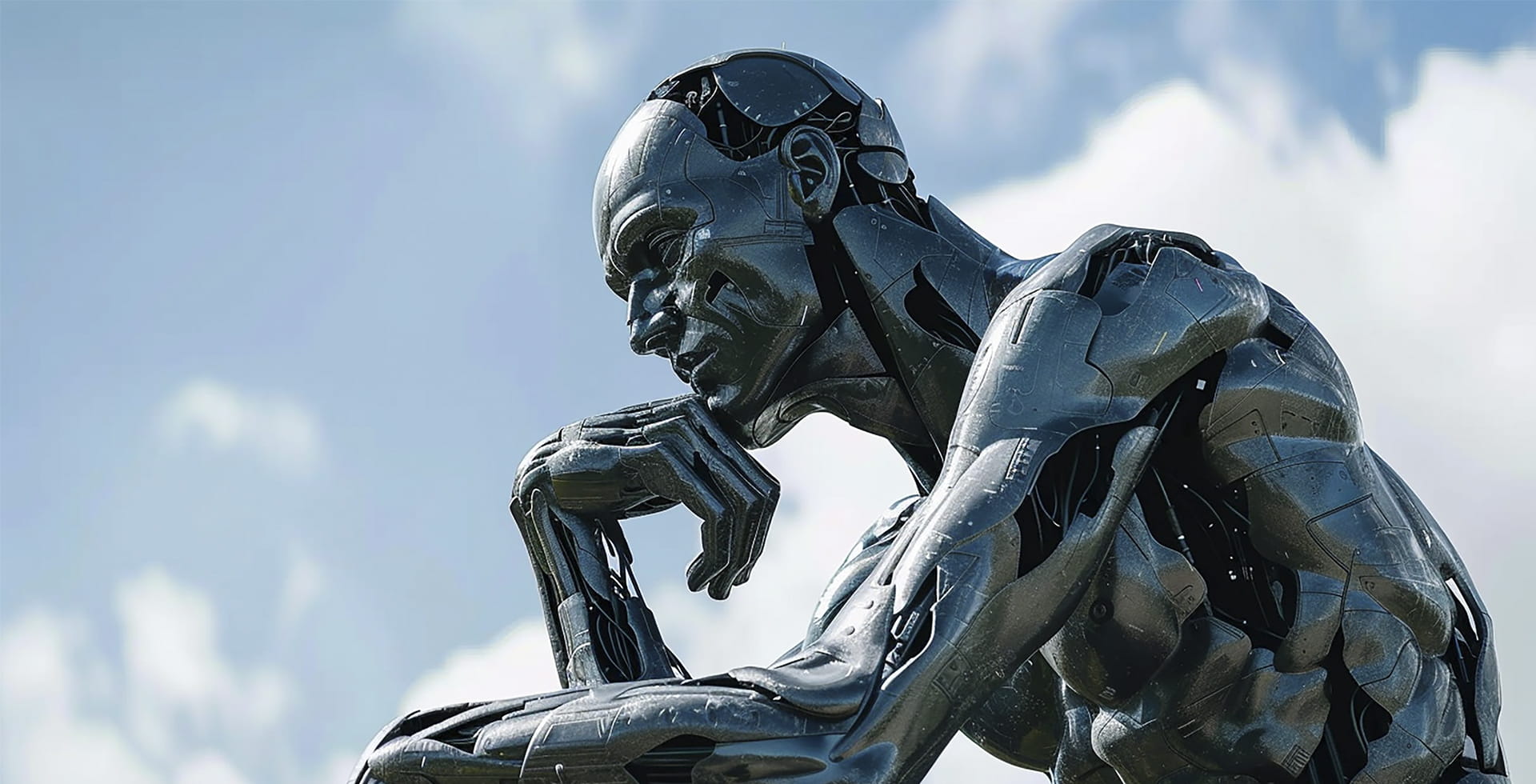
This piece focuses on humanoid robots, one of the most visible examples of what is increasingly described as physical AI or embodied intelligence. Rather than operating solely in the digital world, these systems are designed to perceive their surroundings, make decisions and interact with the physical environment. As such, humanoid robots are moving beyond laboratory demonstrations towards real-world deployment.
Their development provides a useful lens through which to understand both the evolution of AI and the changing nature of China’s technology sector.
Humanoid robots – from concepts to commercialisation
Unlike conventional industrial robots, humanoid robots are designed to mimic humans in both form and function - machines capable of thinking and behaving like a real person. For decades, humanoid robots were largely confined to science fiction. Today, they are more likely to be found moving boxes in warehouses than plotting world domination. Advances in artificial intelligence, hardware engineering and precision manufacturing are bringing the technology closer to practical use.
Humanoid robots moved into the global spotlight in 2021 when Tesla announced plans for its general-purpose Optimus robot. Investment accelerated rapidly in the following years, attracting growing participation from technology, manufacturing and automation companies. More than a dozen humanoid robots appeared alongside Nvidia CEO Jensen Huang at CES 2025, the world’s largest technology trade show, where he commented that the “ChatGPT moment” for robotics was approaching.1
The potential commercial opportunity is substantial. Industry forecasts suggest the humanoid robot market could reach US$40 billion by 20352. The scale of the opportunity reflects the breadth of potential use. Humanoid robots could eventually support activities ranging from industrial production and logistics to healthcare, education and elderly care. Adoption is already moving beyond demonstrations and into selected real-world applications. Early deployments are taking place in factories, warehouses and logistics centres, where robots are beginning to assist with tasks such as material handling, inspection and inventory management.3 While still at an early stage, these deployments suggest the technology is beginning to move from concept towards practical use.
Continued advances in AI capabilities, hardware performance and manufacturing scale should help reduce costs while expanding functionality. However, widespread adoption will ultimately depend on whether humanoid robots can operate reliably, safely and economically in demanding real-world environments.
Exhibit 1: Annual global humanoid robot shipments (units in thousands)

Source: Bank of America Institute, Physical AI, Part 2: Humanoid Robots, 12 March 2026
Why China is emerging as a leader in humanoid robotics
While much of the early global attention on humanoid robotics centred on developments in the United States, China is rapidly emerging as a key participant across the broader value chain. Its role extends beyond supplying components such as sensors, actuators, control systems, batteries and semiconductors. Chinese companies are increasingly developing, manufacturing and deploying complete humanoid robots across a growing range of applications.
More importantly, the discussion around humanoid robots is increasingly shifting from innovation to industrialisation. The critical question is no longer whether robots can run, dance or perform backflips. The harder commercial challenge is teaching them to complete the same task safely and reliably thousands of times a day. This is where China’s advantages in engineering talent, manufacturing expertise and supply-chain depth are likely to prove particularly significant.
These strengths are supported by China’s extensive industrial base. Key robotic components such as servomotors, precision gears, sensors and batteries are increasingly sourced domestically, with local content continuing to rise. As a result, Chinese-made humanoid robots are estimated to be at least 20% cheaper than comparable foreign models. China’s leadership in battery production and rare-earth magnets should also provide an additional advantage as the sector moves towards commercialisation.4
China’s position is also becoming increasingly visible in production and deployment. Industry estimates suggest that approximately 90% of humanoid robots shipped globally in 2025 were manufactured by Chinese companies.4 Chinese firms have begun deploying humanoids in warehouse operations, factory inspection and selected service applications, while public-sector and state-owned enterprise procurement is emerging as an important source of demand.
There are clear parallels with China’s electric vehicle industry. In both sectors, early policy support, sustained investment and manufacturing scale have accelerated the path from innovation to commercialisation. While humanoid robotics remains at a much earlier stage, China’s experience in electric vehicles demonstrates that long-term leadership is often determined not only by technological breakthroughs. Much like electric vehicles a decade ago, the debate is gradually shifting from whether the technology works to how quickly costs can fall and production can scale.
Beyond factories and warehouses, the technology is also becoming increasingly visible in everyday life. For anyone travelling to China, humanoid robots can already be found checking guests into hotels, delivering food in restaurants and performing at major public events. In 2026, a humanoid robot completed the Beijing Humanoid Robot Half Marathon in 50 minutes, compared with 2 hours and 40 minutes for the winning robot just one year earlier.5 This highlights the rapid advances in areas such as balance, locomotion and endurance.
Exhibit 2: China’s % share by number of manufacturers in key humanoid robotics components

Source: UBtech, Bank of America, Allianz Global Investors, September 2025.
Exhibit 3: Humanoids in Operation (units in millions)

Source: Morgan Stanley Research, “Asia Economics: Humanoids and Robots – The Next Chapter in China’s Dominance in Global Manufacturing”, 4 May 2026.
Conclusion
In our view, China’s long-term economic objective is to build a future growth model centred on technology-intensive manufacturing, reducing its historical reliance on property and infrastructure. As this transition progresses, it is creating a broader and more dynamic investment universe.
Humanoid robots provide a useful illustration of this shift. While still at an early stage of development, the sector highlights China’s growing strengths in artificial intelligence, advanced manufacturing and industrial scale. Progress is increasingly moving beyond laboratory demonstrations and into real-world applications. Challenges remain around cost, reliability, safety and commercial viability. Nevertheless, the pace of technological progress suggests humanoid robots are moving from technological curiosity towards industrial reality.
For investors, the potential extends well beyond robot manufacturers themselves. Many of the most compelling opportunities may lie in the companies supplying the semiconductors, software, sensors, motion-control systems and precision components that will underpin the next generation of intelligent machines. As with many transformative technologies, some of the largest beneficiaries may ultimately be found deeper within the value chain than in the robots themselves.
Capturing the investment opportunity
There are a number of listed companies on China’s stock exchanges that are investing significant capital and research resources into humanoid robots and related technologies. Examples include:
- Zhejiang Shuanghuan Driveline – the company holds a portfolio of over 400 patents in power management, electric motors, and control algorithms design6. In particular, the company is a specialist in harmonic and precision reducers, which act as a robot’s joints by converting motor power into highly controlled and accurate movement.
- Jiangsu Hengli Hydraulic – a leading manufacturer of hydraulic and precision motion-control components that is expanding into ball screws and roller screws, critical components used in robotic limbs and actuators. These products enable precise linear movement and are considered a key bottleneck technology for humanoid robots.
- Zhejiang Sanhua Intelligent Controls – building on its expertise in precision control systems, Sanhua is expanding into humanoid robot actuators, often described as the robot’s “muscles”. The company already supplies Tesla’s electric vehicle business and is widely regarded as one of the strongest candidates to supply key components for Tesla’s Optimus humanoid robot programme.
- Cambricon Technologies – one of China’s leading AI chip designers, developing processors used for machine vision, language models and intelligent decision-making. If motors and actuators provide a robot’s muscles, AI processors provide much of its “brain”, enabling robots to interpret their surroundings, process vast amounts of data and respond autonomously.
1 Ctech, as of 27 January 2025.
2 Barclays Research, AI gets physical: Innovation meets opportunity, 14 January 2026.
3 Figure AI, “F.02 Contributed to the Production of 30,000 Cars at BMW,” 19 November 2025.
4 Morgan Stanley Research, “Asia Economics: Humanoids and Robots – The Next Chapter in China’s Dominance in Global Manufacturing”, 4 May 2026.
5 Yang Cheng and Li Wei. “Robots Outrun Humans at Marathon.” China Daily, April 19, 2026.
6 Zhejiang Shuanghuan Driveline company website, as of 31 July 2026.